- EquityResearch
- Posts
- Buy Low, Sell High... Unless Twitter Says Otherwise
Buy Low, Sell High... Unless Twitter Says Otherwise
The market doesn’t wreck your strategy...social media does!

Anshulika Bansal
July 29, 2025
Hey folks,
Let me ask you something…
Have you ever opened your trading app, skimmed through some headlines…“Dow drops 300 points!” “Tesla misses earnings!”…and suddenly felt like you needed to do something?
Sell. Buy. Maybe just...stare at your portfolio with mild panic?
Same.
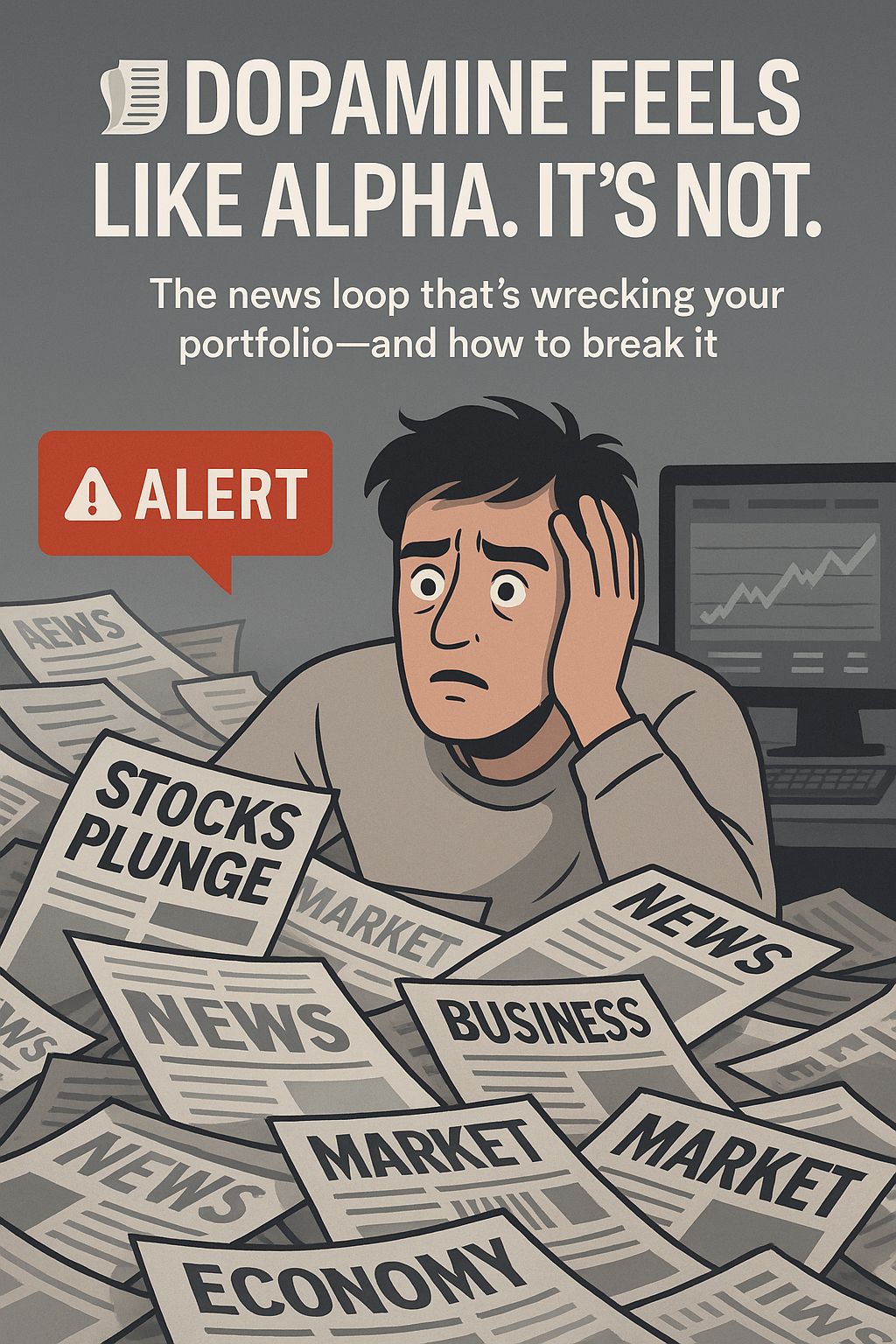
We’ve all been there…mistaking that jolt of urgency we get from news as a signal to act. It feels productive. But most of the time?
It's just dopamine talking.
Today, we’re diving into:
Why your brain loves news (too much)
How it tricks you into trading impulsively
What to do instead if you actually want to build wealth
Let’s unpack it -
Don’t let headlines trade for you…check what actually matters on EquityResearch.
Why Your Brain Loves News (But Not Your Portfolio)
Here’s the deal: every time you read breaking market news…your brain gives you a little hit of dopamine. It’s the same chemical that gets triggered when you:
Get a “like” on Instagram
Hear a Slack ping
Or watch your team hit a buzzer-beater
It’s exciting. But in investing? It’s dangerous.
Dopamine doesn’t help you make smart decisions. It makes you crave more stimulation.
Not more clarity. Not better strategy.
Just more action—whether it’s good or not.
That’s how we get stuck in the loop:
News → Emotion → Impulse → Regret → Repeat.
So...Is News Making You a Worse Investor?
Kinda, yeah.
A study analyzing news mentions of companies (like Financial Times mentions vs. Dow stocks) found a positive correlation between the number of news mentions and daily trading volume—median Spearman’s rho ~0.10 (p < 0.001).
Worse? Only 1–15% of traders make money consistently.
The rest? They’re chasing dopamine, not returns. (Source: Investopedia)
And yes…trading addiction is a real thing. It’s now being compared to gambling addiction. Especially among retail traders.
Your Brain on News: A Quick Breakdown
Here, let’s unpack the mechanics behind the headlines—how your brain gets hijacked.
Neuroscience shows FOMO activates brain regions associated with addiction, generating anticipation and reward signals that aren’t about rational decisions. Under stress or emotional overload, cortisol floods into the brain’s frontal cortex, impairing logic and self-control. (Source: Evan Marks - Mental Performance Coach)
A recent poll, surveying over 1,000 investors, revealed that 37% made impulsive trades during periods of heightened market volatility, clearly showing how emotional triggers override rational plans in real time. (Source: Money.com)
When you see a headline, your brain tags it as urgent, floods with dopamine (“something’s happening!”), and prompts an impulse…even if your long-term plan says “do nothing.”
This triggers a feedback loop:
News → Emotion → Impulse → Regret, a cycle that neurological studies confirm as the dopamine loop.
Key takeaway: Your brain doesn’t just sense news—it feels it as a call to action, even when logic says slow down.
Don’t let headlines trade for you…check what actually matters on EquityResearch.
So… What Do We Do Instead?
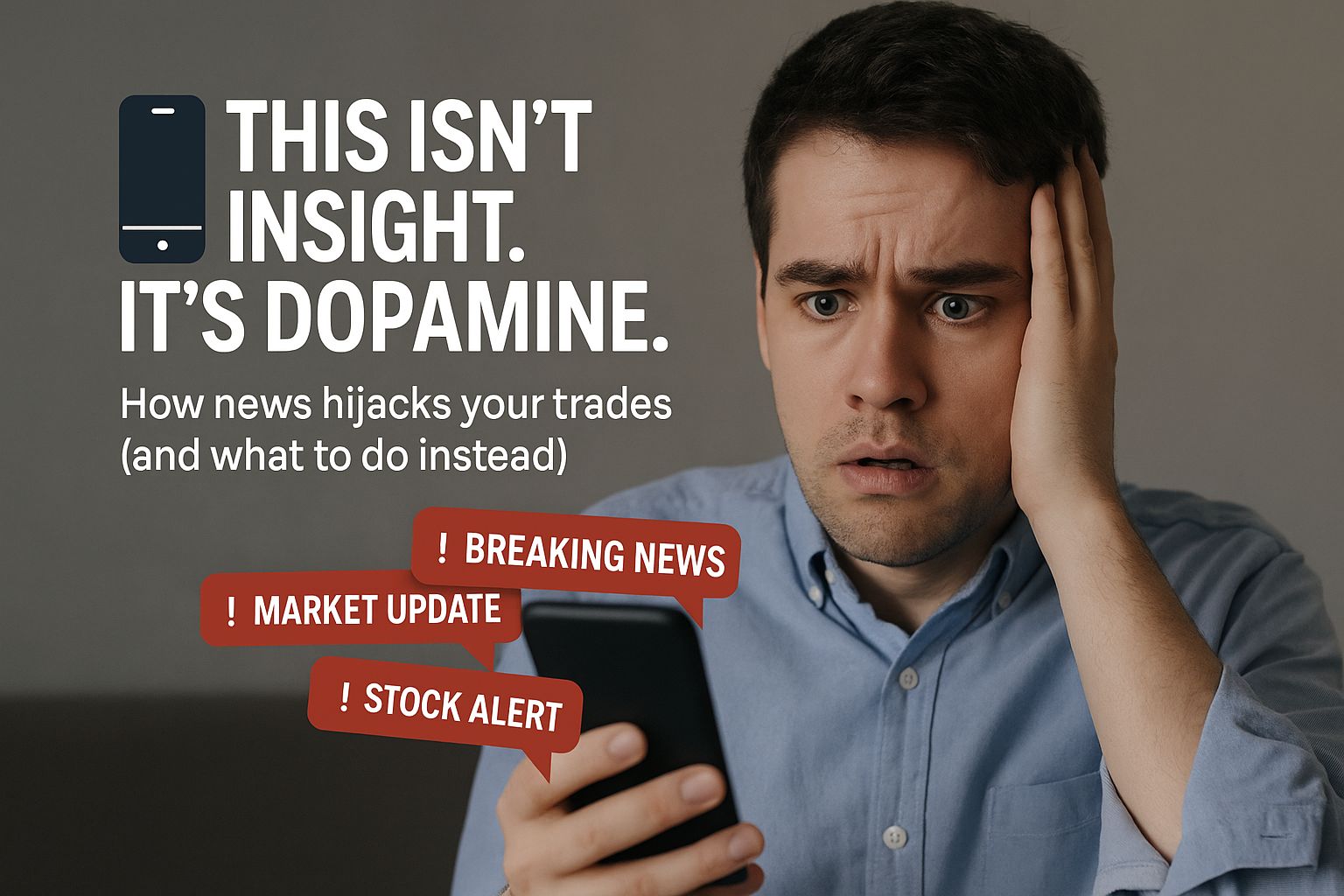
Here’s how to break the dopamine-news loop (without moving to a cave with no WiFi or deleting your brokerage account).
These aren’t just hacks…they’re habits that protect your decision-making in a market built to hijack your brain.
1. Treat news as a clue, not a call to action.
Think of news like weather reports…not like fire alarms.
You wouldn’t sell your house because the forecast said “possible rain.” So why sell your portfolio because a headline screams “Tech Stocks Tank!”?
Your takeaway: Use headlines to support your thesis…not to replace it.
If the news aligns with your long-term view, great.
If not? Let it go.
2. Set media boundaries.
Let’s be honest: 80% of market news is noise, 10% is recycled, and 10% is useful in context.
But the problem isn’t that you're reading news.
It’s that you're drowning in it.
Turn off alerts from hype-driven apps that push every headline
Mute finfluencers who confuse engagement with insight
Use focused tools like EquityResearch.ai that filter the signal from the noise.
No hype. No doomscrolling. Just actual stock research.
Your takeaway: Your attention is limited. Choose where you spend it intentionally.
3. Pause before reacting.
Feel the urge to react to news?
Pause.
Set a timer for 5 minutes.
In that time, ask yourself:
Is this actually actionable, or just emotional?
Does this news change my investment thesis?
Would I make this move if I wasn’t feeling anxious?
Nine times out of ten, that 5-minute pause saves you from a dumb trade.
Your takeaway: Time is a better risk manager than any chart.
4. Journal your triggers.
We journal our workouts and calories. Why not track our financial impulses?
Write down:
What you read
How it made you feel
What you almost did
This builds awareness…and separates real strategy from dopamine-fueled reactions.
Over time, you’ll see patterns:
→ Maybe you panic after certain types of headlines
→ Maybe you only FOMO when everyone on X is bullish
Your takeaway: Awareness > willpower. When you know your patterns, you can break them.
5. Celebrate process, not outcomes.
This one’s big.
If your goal is to be a long-term investor, then today’s outcome doesn’t matter.
What matters is: Did you follow your plan?
If yes? You win.
If no? Adjust and try again tomorrow.
Celebrate days when you:
Didn’t act on a panic headline
Stuck to your risk management
Didn’t open your portfolio 47 times
Your takeaway: Trading is emotional fitness. Reward consistency, not adrenaline.
Don’t let headlines trade for you…check what actually matters on EquityResearch.
Bottom Line: Stop Chasing the Rush
The market doesn’t reward who reacts fastest.
It rewards who stays calm longest.
News gives you dopamine. But long-term investing gives you returns.
So next time you feel that little jolt reading a headline, pause and smile.
You’re human.
But you’re also smarter than your brain wants you to believe.
Want More Smart (and Slightly Sassy) Investing Psychology?
We write about money, markets, and the weird stuff our brain does in between.
All backed by data. Never boring. Always useful.
See you next week…
Don’t let headlines trade for you…check what actually matters on EquityResearch.
Disclaimer: This newsletter is for informational purposes only and should not be considered financial advice. Always consult with a financial advisor before making investment decisions.