- EquityResearch
- Posts
- Think You're Too Smart to Mess Up? Think Again
Think You're Too Smart to Mess Up? Think Again
Biases don’t care how many books you've read—they’ll still mess with your money.

Anshulika Bansal
July 15, 2025
Hey folks,
Let’s face it: even the savviest investors…those who eat annual reports for breakfast…can find themselves making moves that, in hindsight, look like facepalm-worthy missteps.
Turns out, being smart doesn’t immunize you against your brain.
Welcome to the wild world of behavioral finance…where your own biases are often the biggest risk to your portfolio.
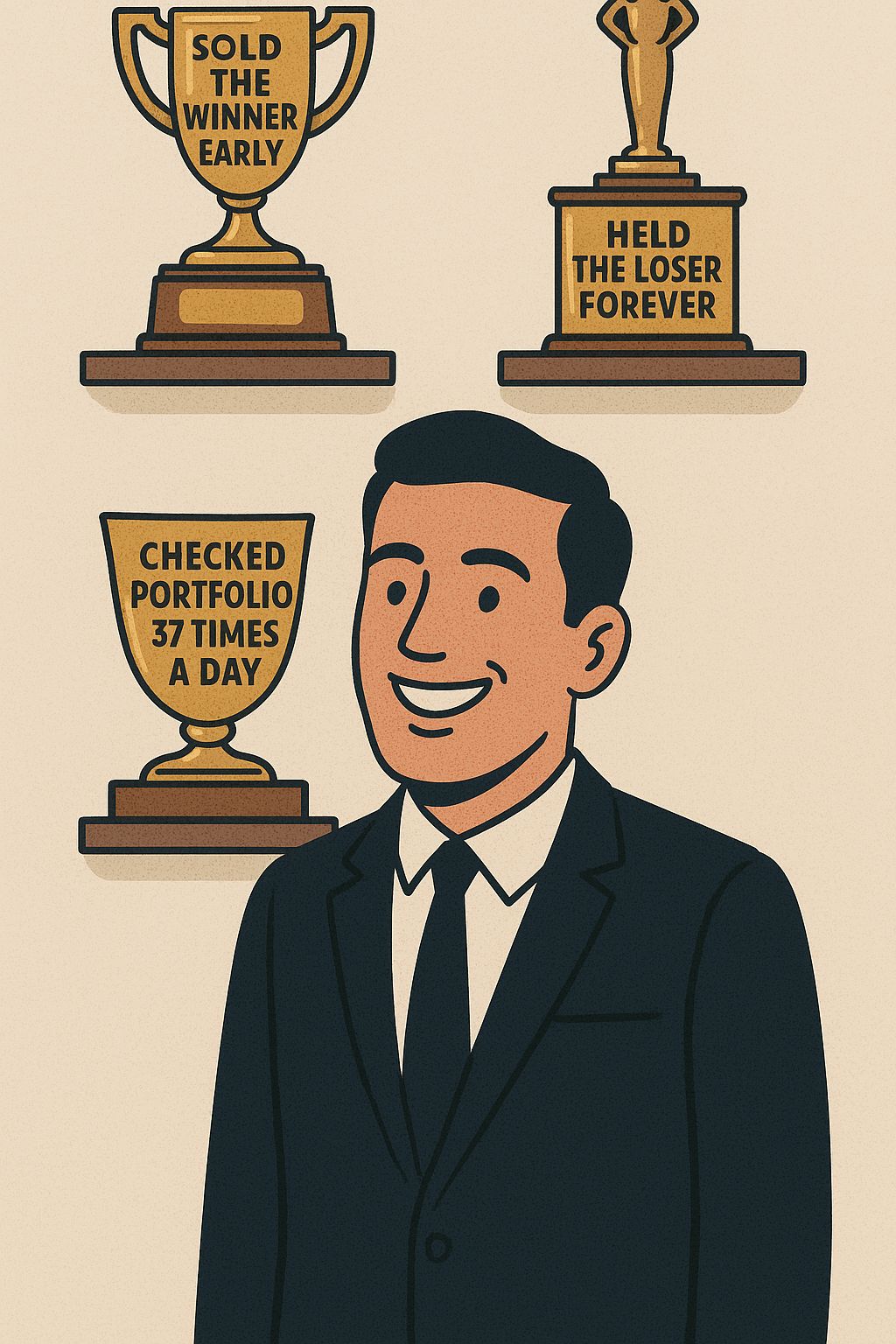
Imagine this:
You’re a Michelin-star chef. You know flavors, technique, and plating like the back of your hand.
But one night, you’re tired, hungry, and distracted… so you microwave instant noodles and eat them straight from the container.
Not because you don’t know better. But because you’re human.
Now replace the chef’s hat with a portfolio, and that sad noodle moment with a bad trade.
Yeah, my friend, that is a fact, even smart investors make dumb decisions.
Let’s dive deep into this -
Because being smart isn’t the same as being right. Run your next stock through EquityResearch.
Overconfidence: The “I’m Over Average Syndrome”

The real opponent isn’t the market, it’s you (your biases).
Smart investors often believe they’re really smart…especially when it comes to the markets.
In one survey, by Barber & Odean, a group of investors were asked to rate their own skills.
74% of professional investors said they were above average at what they do.
(Quick math check: only 50% can actually be above average. Someone’s lying to themselves.)
And here’s the fact:
📉 The more investors trade, the worse they tend to perform.
In the same survey, they analyzed 10,000 brokerage accounts, the most active traders earned:
5% less than average over one year
8.6% less over two years
Why?
Because overconfident investors tend to trade too often, chase short-term moves, and think they can “outsmart” the market. Spoiler: most don’t.
Loss Aversion & The Disposition Effect
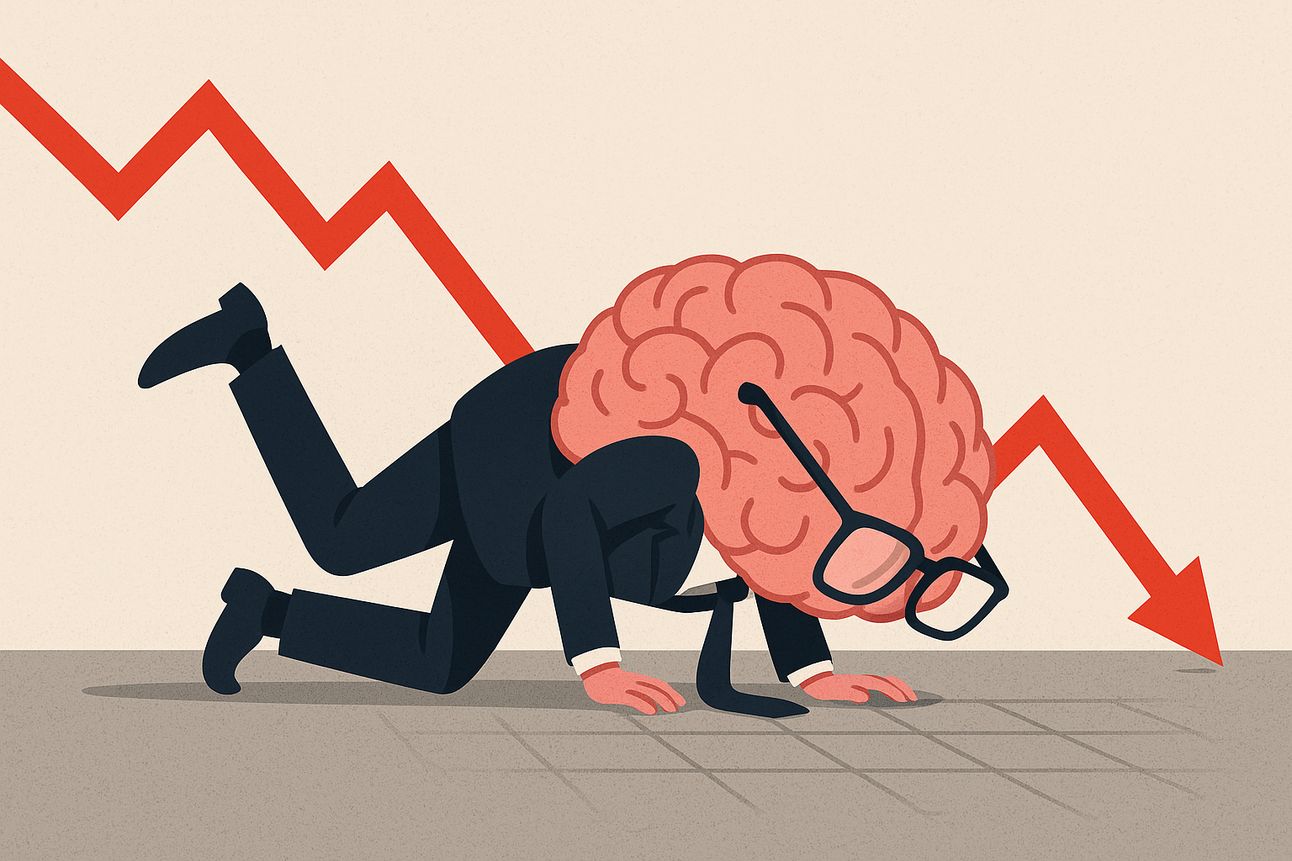
Even the smartest minds can slip.
Pain Hurts Twice as Much as Pleasure Feels Good
Our brains are wired in weird ways.
When it comes to investing, losing money feels way worse than making money feels good. That’s called loss aversion.
This messes with our decision-making in two key ways:
The Disposition Effect
You know that stock that’s down 35%, and you're just... waiting for it to bounce back?
You don’t want to sell at a loss. It feels too painful.
Meanwhile, your winners? You might sell them too early, just to "lock in" a gain.
Result: You hang on to bad investments too long and cut good ones too soon.
That’s the disposition effect…and it’s been confirmed in tons of investor behavior studies.
The $900 vs. $1,000 Thought Experiment
This one shows how we behave differently when facing gains vs losses, even if the math is the same.
Scenario A (you’re gaining):
Would you rather:
Take a guaranteed $900, or
Take a 90% chance to win $1,000?
Most people choose the safe $900. We like guaranteed wins.
Scenario B (you’re losing):
Would you rather:
Take a sure loss of $900, or
Take a 90% chance to lose $1,000, with 10% chance of losing nothing?
Most people choose the risky gamble. We’d rather risk losing more than accept a guaranteed loss.
Same probabilities. Same math. Different behavior.
Why? Because our brains are risk-averse with gains but risk-seeking with losses.
Recency Bias & Herding: FOMO on Steroids
You know that feeling when a stock shoots up 20% and suddenly everyone is talking about it?
Yeah, that’s not strategy. That’s recency bias…a mental shortcut where we assume that whatever just happened is likely to keep happening.
Basically, your brain says:
“This stock just did great, so it must be a winner!”
(Spoiler: it might not be.)
It’s like thinking the weather will always be sunny because today is nice. You ignore the bigger picture…and so do a lot of investors.
The Herd Mentality
When people see others making money from something, they want in. Fast.
Even very smart investors get swept up in the crowd.
But here’s the data punch in the face:
More than 70% of mutual funds that were top performers in one year failed to stay on top the next year.
(Source: AIinvest)
So chasing the latest hot trend often means... you’re late to the party.
It Gets Worse: You’re Probably Biased and You Know It
In a survey of investors by Barron's:
88% admitted to availability bias (judging based on what’s most recent or memorable)
78% admitted to confirmation bias (only noticing info that supports their existing belief)
More than two-thirds said they’ve acted on recency or loss-aversion bias
That’s like knowing your GPS is glitching… but still following it off a cliff.
Sometimes, the best move isn’t running with the crowd — it’s standing still while everyone else runs in circles.
Because being smart isn’t the same as being right. Run your next stock through EquityResearch.
Anchoring: Stuck on the First Number They See
Imagine you buy a stock at $100.
Now, even if the business changes, the market shifts, or aliens land—that $100 becomes your emotional benchmark.
That’s anchoring.
Your brain grabs the first number it sees (like the price you paid) and treats it like it’s gospel.
So when the stock drops to $75, you don’t want to sell.
Why? Because it feels like “you’re losing.”
But if it jumps to $105, you might sell too early—thinking “Nice! I’m above my anchor.”
This happens all the time.
What the Research Says:
A study on retail investors (via stock trading apps) showed that people consistently use their first purchase price as an anchor, and it affects their future decisions—even when it’s no longer relevant.
(Source: Wired)Even historical highs (like that all-time peak price you remember during the last bull run) become anchors.
So when a stock drops, investors keep hoping it’ll “return to that high” — even if the fundamentals say otherwise.
(Source: Mint)
Anchoring blinds you to new information.
Instead of adjusting your strategy based on what’s happening now, you stay fixated on the past.
It's like refusing to leave your umbrella at home just because it rained last Tuesday.
Decision Fatigue: When Your Brain Taps Out
The more decisions you make, the worse they get.
That’s decision fatigue—your brain gets tired, and you start defaulting to easy (and often bad) choices.
Studies show even judges are more likely to deny parole later in the day.
Editors reject more papers the longer they read.
Now imagine making investment choices after 9 hours of news, charts, and portfolio tweaks...
Result? You stop analyzing and start reacting.
That’s when bias creeps in—and smart decisions fly out the window.
Because being smart isn’t the same as being right. Run your next stock through EquityResearch.
FOGI - Fear of Getting In
You’ve heard of FOMO (Fear of Missing Out)...
But meet its quieter, sneakier cousin: FOGI — Fear of Getting In.
Here’s how it works:
Smart investors—yes, even the ones who read market reports like bedtime stories—can get stuck waiting for the “perfect” moment to invest.
Why?
Because they’re haunted by past crashes:
“What if I buy now and the market crashes like in 2008?”
“What if this rally is just a bubble?”
So instead of investing, they freeze.
They sit on the sidelines… and watch the market go up without them.
FOGI doesn’t feel reckless like FOMO—but it can be just as damaging.
Bottom Line
Even highly rational investors are human. Emotions, context, fatigue—they sneak in and hijack decisions.
The antidote? Awareness and structure:
Know your biases. Just saying “hello overconfidence” helps it lose power.
Write down your strategy + rules ahead of time. Then keep your head out of the noise.
Automate where you can, rebalance, let slow and steady do the heavy lifting.
Take breaks. Yes—your brain needs to recharge.
TL;DR: If you're smart, that's great—but it doesn’t protect your neuron wiring from bias. Smart investors make dumb decisions not from lack of knowledge, but from being human.
The real edge comes from designing systems that outsmart your mind.
Because being smart isn’t the same as being right. Run your next stock through EquityResearch.
Disclaimer: This newsletter is for informational purposes only and should not be considered financial advice. Always consult with a financial advisor before making investment decisions.